Send Email Message: Best Practices for Small Businesses
April 06, 2026
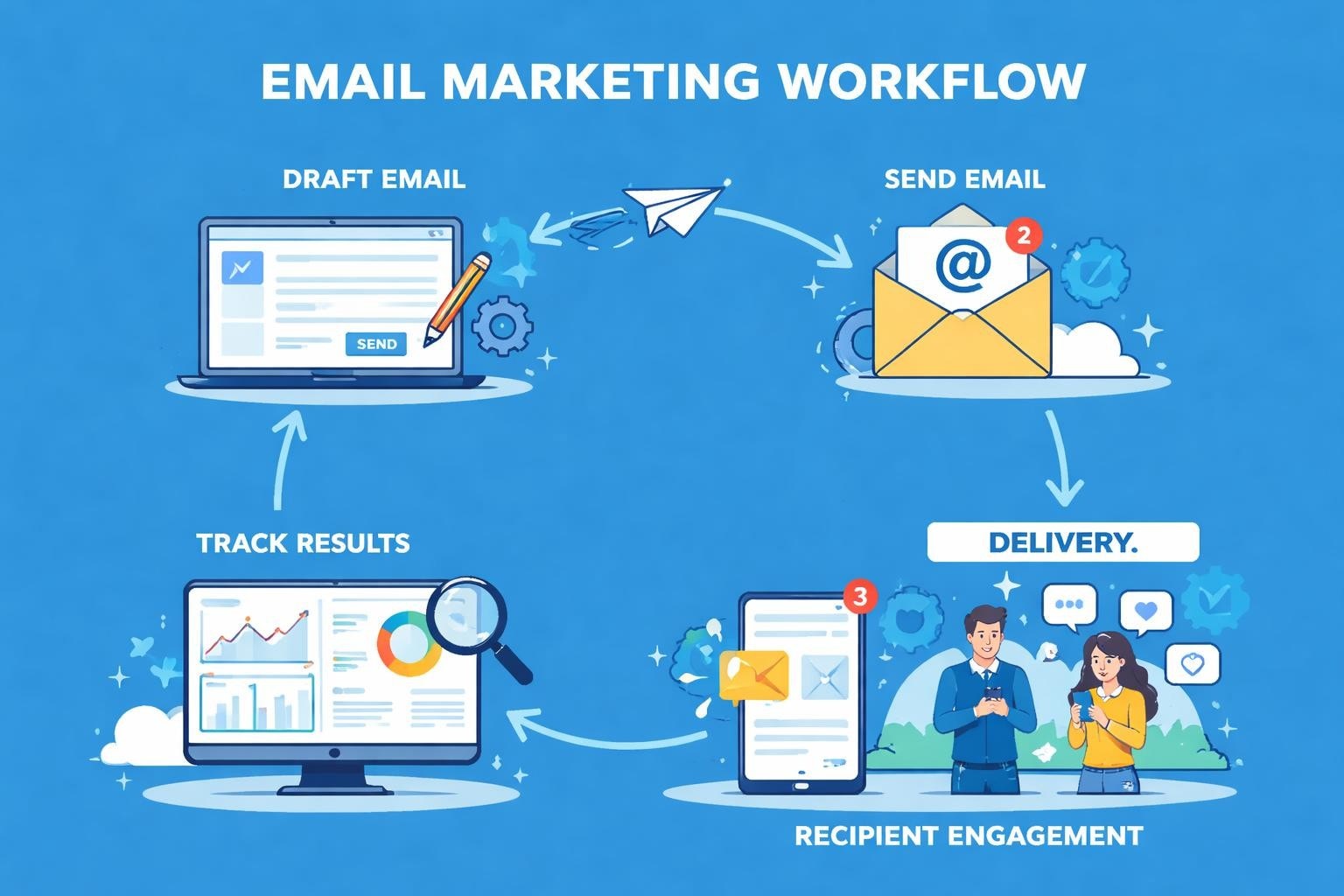
Email remains the cornerstone of business communication in 2026, yet many small businesses struggle to send email message campaigns that truly resonate with their audience. The difference between messages that convert and those that languish unopened often comes down to understanding fundamental principles of email composition, timing, and audience engagement. Whether you're reaching out to potential clients, nurturing existing relationships, or broadcasting important updates, mastering the art of email communication can transform your business outcomes. This comprehensive guide explores proven strategies to help small businesses craft, deliver, and optimise email messages that achieve measurable results.
Understanding the Fundamentals of Email Communication
When you send email message campaigns, you're not merely transmitting information. You're building relationships, establishing credibility, and creating opportunities for meaningful engagement. The foundation of effective email communication rests on three pillars: clarity, relevance, and timing.
Every business email serves a specific purpose, whether that's to inform, persuade, or maintain contact. Before composing any message, define your objective clearly. Are you introducing a new product, following up on a conversation, or providing valuable industry insights? Your goal shapes every element of your email, from the subject line to the call to action.
Key elements of effective business emails include:
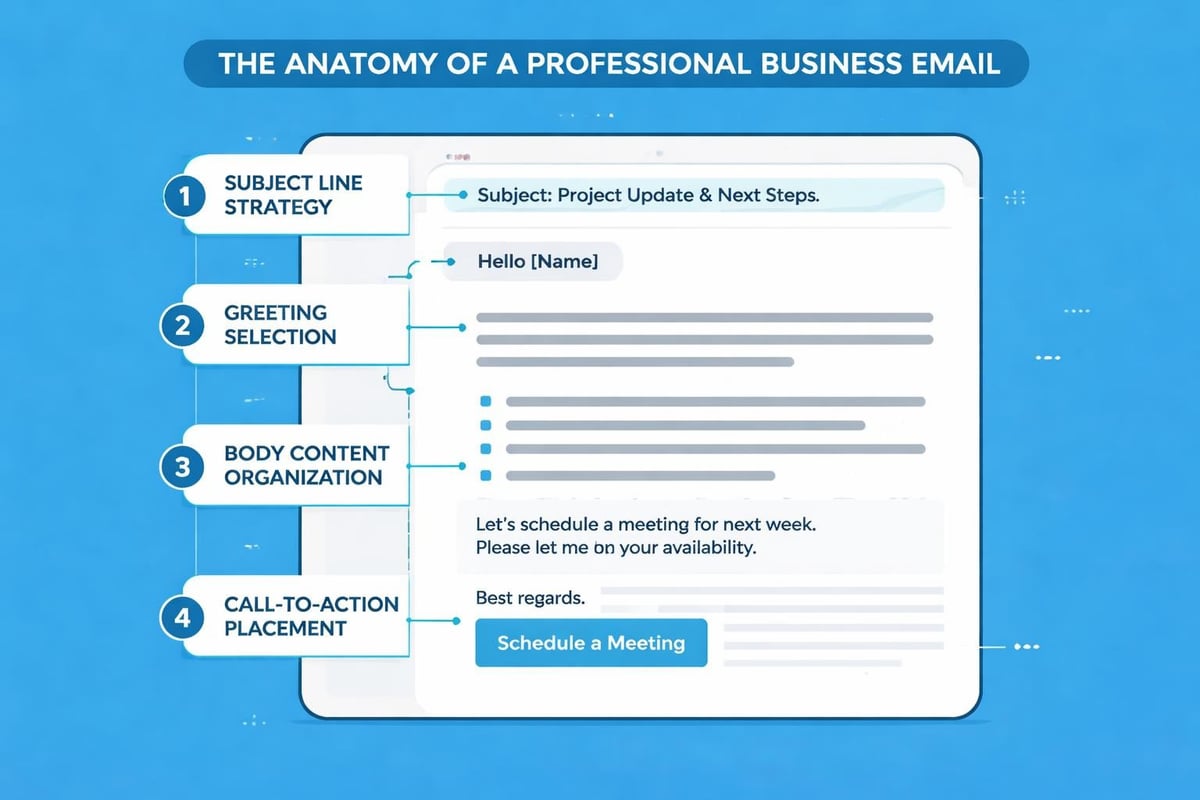
- A compelling subject line that promises genuine value
- Professional sender identification that builds trust
- Concise, scannable body text that respects recipients' time
- A clear call to action that guides next steps
- Mobile-optimised formatting for on-the-go readers
According to Microsoft's best practices for email communication, professional emails should balance formality with approachability whilst maintaining focus on the recipient's needs rather than the sender's agenda.
Crafting Subject Lines That Demand Attention
Your subject line determines whether recipients will send email message responses or relegate your communication to the digital dustbin. With small business owners receiving hundreds of emails daily, you have mere seconds to capture attention.
Effective subject lines share common characteristics. They're specific rather than vague, promising concrete benefits or information. They create urgency without resorting to manipulation. They personalise where appropriate, acknowledging the recipient's context or previous interactions.
| Subject Line Type | Example | Open Rate Impact |
|---|---|---|
| Personalised | "Sarah, your marketing strategy feedback" | +26% |
| Question-based | "Ready to double your email engagement?" | +18% |
| Urgency-driven | "Last chance: 48 hours for early access" | +22% |
| Value-focused | "5 templates to streamline client onboarding" | +15% |
| Direct & clear | "Q2 performance report attached" | +12% |
Avoid spam triggers like excessive capitalisation, multiple exclamation marks, or misleading promises. Carnegie Mellon's email best practices guide emphasises that authenticity and clarity consistently outperform gimmicky tactics in professional contexts.
Personalisation and Audience Segmentation
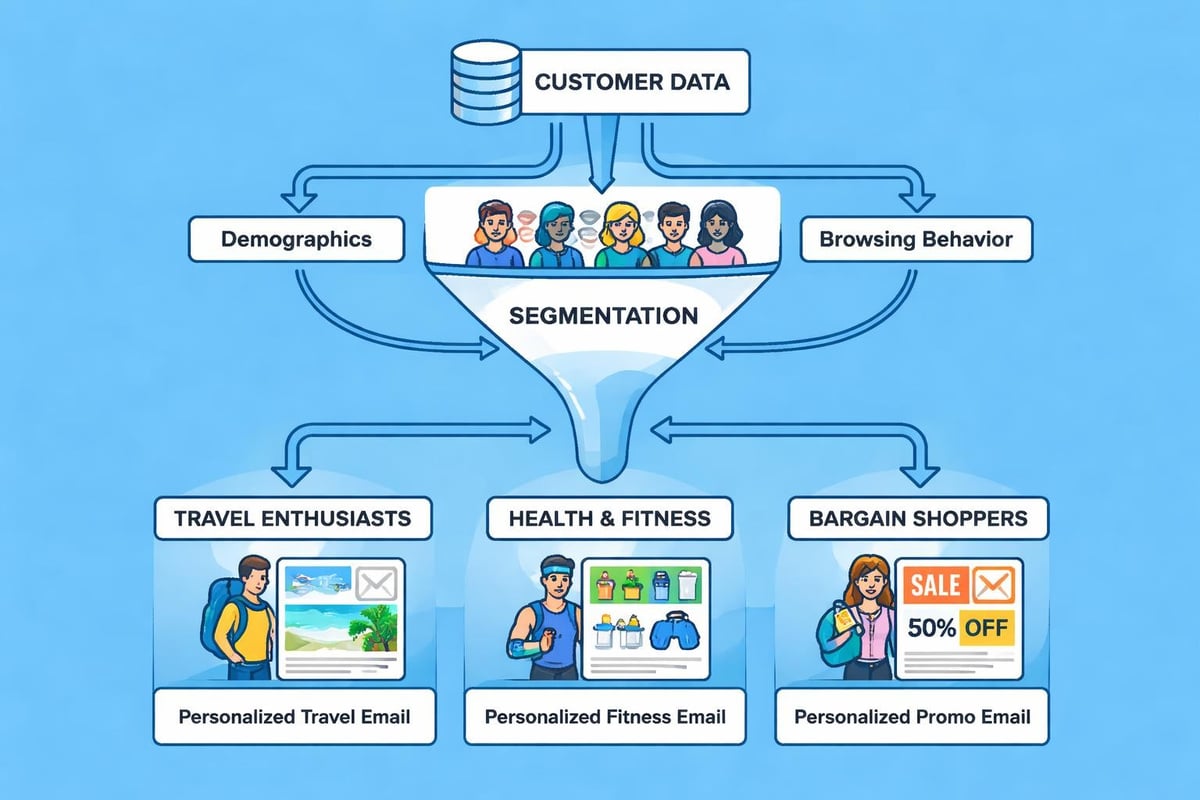
Generic mass emails rarely achieve the engagement levels of targeted, personalised communications. When you send email message campaigns to segmented audiences, you dramatically increase relevance and response rates.
Start by dividing your email list into meaningful segments based on factors such as:
- Purchase history and customer lifecycle stage
- Industry or business sector
- Geographic location and time zone
- Engagement level with previous emails
- Specific interests or content preferences
Platforms like Astonish Email enable small businesses to implement sophisticated segmentation without requiring technical expertise or enterprise-level budgets. The ability to create targeted campaigns ensures that each recipient receives content aligned with their specific needs and interests.
Personalisation extends beyond inserting a recipient's name into the greeting. It involves understanding their pain points, acknowledging their business context, and offering solutions tailored to their circumstances. Reference previous conversations, acknowledge milestones, and demonstrate that you've invested time in understanding their unique situation.
Writing Body Content That Engages
The body of your email must deliver on the promise made in your subject line whilst maintaining reader engagement throughout. Small business owners are busy professionals who appreciate concise, actionable information.
Structure your content for scannability. Use short paragraphs, bullet points, and clear headings to break up text. Lead with your most important information, as many recipients skim rather than read thoroughly.
Effective email body structure includes:
- Opening paragraph that immediately addresses the recipient's interests
- Supporting paragraphs that provide necessary detail or context
- Visual breaks through formatting, spacing, or images
- A single, clear call to action that guides next steps
Research from Time magazine on email replies suggests that emails between 50-125 words achieve the highest response rates, whilst messages exceeding 500 words see engagement drop significantly. This doesn't mean every email must be brief, but it underscores the importance of respecting recipients' time and attention.
When you need to send email message campaigns with substantial information, consider alternative formats. Attach detailed documents, link to blog posts for deeper dives, or offer to schedule a conversation for complex topics. Your email itself should serve as a compelling introduction rather than an exhaustive treatise.
Technical Considerations for Deliverability
Even brilliantly crafted emails fail if they never reach the inbox. Deliverability depends on technical factors that small businesses often overlook when they send email message campaigns.
Your sender reputation affects whether email providers classify your messages as legitimate communication or potential spam. Liaison's email best practices emphasise maintaining list hygiene, honouring opt-out requests promptly, and monitoring engagement metrics to preserve sender reputation.
| Deliverability Factor | Impact | Improvement Strategy |
|---|---|---|
| Sender authentication | High | Implement SPF, DKIM, DMARC records |
| List quality | High | Regularly remove inactive subscribers |
| Engagement rates | Medium | Send relevant, valuable content |
| Spam complaints | High | Make unsubscribe options clear and easy |
| Sending frequency | Medium | Establish consistent, predictable schedule |
Authentication protocols verify that emails genuinely originate from your domain, preventing spoofing and building trust with email providers. Most professional email marketing platforms handle these technical requirements automatically, but it's essential to verify proper configuration.
Monitor your bounce rates, spam complaints, and engagement metrics regularly. These indicators provide early warning when deliverability issues emerge, allowing you to address problems before they severely impact your sender reputation.
Optimal Timing and Frequency
When you send email message campaigns significantly influences their effectiveness. Research consistently shows that timing affects open rates, click-through rates, and conversions.
For business-to-business communications, Tuesday through Thursday typically yield the highest engagement, with mid-morning (10-11 AM) and mid-afternoon (2-3 PM) performing best. However, these generalisations require testing against your specific audience's behaviour.
Consider time zones when scheduling campaigns to international audiences. A message sent at 10 AM GMT reaches New York recipients before their workday begins and Sydney contacts after business hours. Sophisticated email platforms allow timezone-based sending to ensure optimal delivery times for each recipient.
Frequency requires balancing staying top-of-mind against overwhelming recipients. TechRadar's email outreach tips recommend establishing a consistent schedule that recipients can anticipate, whether that's weekly newsletters, monthly updates, or campaign-specific communications.
Track unsubscribe rates closely. A sudden spike often indicates that you're sending too frequently or that content relevance has declined. Conversely, gradually increasing frequency whilst monitoring engagement can reveal your audience's upper tolerance threshold.
Mobile Optimisation Essentials
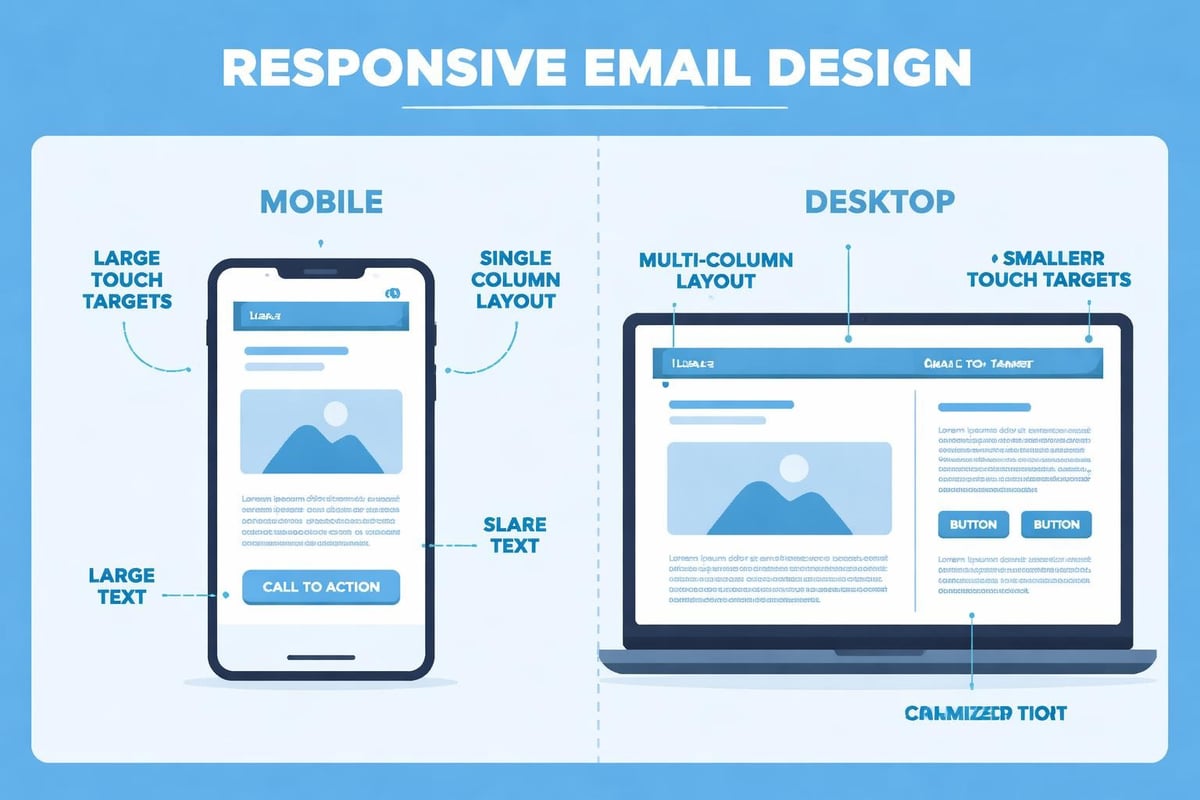
Over 65% of business emails are now opened on mobile devices, making mobile optimisation non-negotiable when you send email message campaigns. Small screens demand different design approaches than desktop viewing.
Mobile-friendly email checklist:
- Single-column layouts that adapt to narrow screens
- Font sizes of at least 14px for body text
- Touch-friendly buttons and links (minimum 44x44 pixels)
- Compressed images that load quickly on cellular connections
- Concise subject lines visible without truncation on mobile
Test your emails across multiple devices and email clients before sending. What displays perfectly in desktop Gmail may render poorly in mobile Outlook. Many email marketing tools include preview features that show how messages appear across various platforms, saving time and preventing embarrassing formatting failures.
Preheader text (the snippet visible after the subject line in many email clients) deserves careful attention. This secondary messaging opportunity can reinforce your subject line or provide additional context that encourages opens. Keep preheader text concise and complementary to your subject line rather than merely repeating it.
Building Effective Call-to-Action Strategies
Every email should guide recipients toward a specific action. When you send email message campaigns without clear calls to action, you leave engagement to chance and miss opportunities for measurable outcomes.
Effective calls to action share several characteristics. They use action-oriented language that specifies exactly what happens next. They create visual contrast through colour, size, or placement. They minimise friction by requiring minimal steps between clicking and completing the desired action.
Limit emails to a single primary call to action. Multiple competing CTAs dilute focus and reduce overall conversion rates. If you must include secondary actions, make the hierarchy visually obvious through size, colour, or placement.
Testing and Iteration
Continuous improvement distinguishes successful email marketers from those who achieve mediocre results. When you send email message campaigns, treat each one as an opportunity to learn and refine your approach.
A/B testing allows you to compare variations systematically. Test subject lines, send times, content formats, calls to action, and personalisation strategies. Change one variable at a time to isolate what drives performance improvements.
Prioritise testing these high-impact elements:
- Subject line length and style
- Sender name (company vs. individual)
- Email length and format
- CTA placement and wording
- Personalisation depth
Track metrics beyond open rates. Click-through rates, conversion rates, revenue per email, and subscriber lifetime value provide deeper insights into campaign effectiveness. Understanding which emails drive actual business outcomes rather than merely engagement metrics allows for smarter resource allocation.
Many small businesses find that establishing a professional email system with built-in analytics capabilities transforms their ability to measure and optimise campaign performance without requiring specialised technical knowledge.
Compliance and Ethical Considerations
Legal and ethical email practices protect both your business and your recipients. When you send email message campaigns, you must comply with regulations like GDPR, CAN-SPAM, and other regional requirements governing commercial email communications.
Essential compliance requirements include:
- Obtaining explicit consent before adding contacts to your list
- Providing clear, functional unsubscribe mechanisms in every email
- Including your physical business address
- Honouring opt-out requests within required timeframes
- Accurately representing your identity and intent
Beyond legal minimums, ethical email marketing builds long-term trust. Don't purchase email lists, mislead recipients about message content, or employ dark patterns that make unsubscribing difficult. Short-term gains from questionable tactics invariably damage reputation and deliverability over time.
Transparency about data usage and storage builds confidence. Clear privacy policies and anti-spam commitments demonstrate respect for recipients and differentiate your business in an increasingly privacy-conscious marketplace.
Automation and Workflow Efficiency
Small businesses often lack resources for manually managing complex email programmes. Automation enables sophisticated, personalised communication at scale when you send email message campaigns through properly configured workflows.
Triggered emails based on specific actions or dates consistently outperform broadcast messages. Welcome sequences for new subscribers, abandoned cart reminders for e-commerce, birthday greetings, or re-engagement campaigns for inactive contacts all benefit from automation.
| Automation Type | Use Case | Average Performance Lift |
|---|---|---|
| Welcome series | New subscriber onboarding | 320% higher engagement |
| Abandoned cart | E-commerce recovery | 18% conversion rate |
| Re-engagement | Inactive subscriber revival | 12% list reactivation |
| Birthday/anniversary | Relationship building | 481% higher revenue per email |
| Post-purchase | Customer satisfaction & upsell | 217% higher transaction rate |
Start with simple automations and expand as you gain confidence. A basic welcome email to new subscribers requires minimal setup but immediately demonstrates professionalism and sets expectations for future communications.
Platforms designed for small businesses, like those offering streamlined email workflows, make automation accessible without requiring programming knowledge or enterprise-level investments.
Content Planning and Calendar Management
Consistency in email communication builds anticipation and trust. When you send email message campaigns sporadically, subscribers forget your brand between communications and engagement suffers.
Develop a content calendar that maps email sends against business objectives, seasonal trends, and subscriber needs. Plan major campaigns well in advance whilst maintaining flexibility for timely, relevant messages.
Monthly email calendar template:
- Week 1: Educational content or industry insights
- Week 2: Product spotlight or feature highlight
- Week 3: Customer success story or case study
- Week 4: Special offer or exclusive subscriber benefit
This structure creates predictability for your team and variety for subscribers. Adjust frequency based on your audience's tolerance and your capacity to produce quality content consistently.
Batch content creation improves efficiency. Dedicate time to write multiple emails in single sessions, maintaining voice consistency whilst capturing creative momentum. Schedule these messages for future delivery, ensuring consistent communication even during busy periods.
Advanced Personalisation Techniques
Basic personalisation like name insertion represents merely the starting point. Advanced techniques leverage behavioural data, preferences, and context to create genuinely relevant experiences when you send email message campaigns.
Dynamic content blocks change based on recipient characteristics. A single email template might display different product recommendations, images, or messaging depending on purchase history, location, or engagement patterns. This approach maintains efficiency whilst delivering personalised experiences.
Predictive analytics identify patterns in subscriber behaviour, enabling proactive communication. If data suggests a customer typically reorders supplies monthly, a timely reminder with simplified reordering process demonstrates attentiveness whilst driving convenient purchases.
Contextual personalisation acknowledges where recipients are in their customer journey. New subscribers receive educational content building product knowledge, whilst long-term customers might receive exclusive access to advanced features or special recognition.
These sophisticated approaches require capable platforms, but many modern solutions designed for small businesses now offer advanced personalisation features previously accessible only to enterprise organisations. Exploring business email solutions reveals how accessible these capabilities have become.
Measuring Success and ROI
Analytics transform email from a cost centre into a measurable revenue driver. When you send email message campaigns with proper tracking, you can quantify exactly how email marketing contributes to business objectives.
Essential email marketing metrics include:
- Open rate (subject line and sender effectiveness)
- Click-through rate (content relevance and CTA performance)
- Conversion rate (campaign effectiveness against business goals)
- Revenue per email (direct financial impact)
- List growth rate (audience building momentum)
- Unsubscribe rate (content and frequency appropriateness)
Benchmark your performance against industry standards, but focus primarily on improving your own baselines. A 25% open rate might be exceptional in one industry but concerning in another. Track trends over time to identify what resonates with your specific audience.
Calculate email marketing ROI by dividing revenue generated by total costs (platform fees, content creation time, design resources). Most small businesses discover email delivers among the highest returns of any marketing channel, often exceeding £38 for every £1 invested when executed strategically.
Attribution models help understand email's role in multi-touch customer journeys. While a purchase might occur after a web search, previous email touchpoints often built awareness and consideration that made that final conversion possible.
Mastering how to send email message campaigns effectively transforms small business communication from ad hoc outreach into strategic, measurable marketing that builds relationships and drives revenue. The strategies outlined here provide a foundation for creating professional, engaging emails that respect recipients whilst achieving business objectives. Astonish Email empowers small businesses with the tools, templates, and automation needed to implement these best practices without requiring technical expertise or enterprise budgets. Start building more effective email communication today and discover how strategic email marketing drives measurable business growth.