How to Plan Email Campaigns That Convert in 2026
April 19, 2026
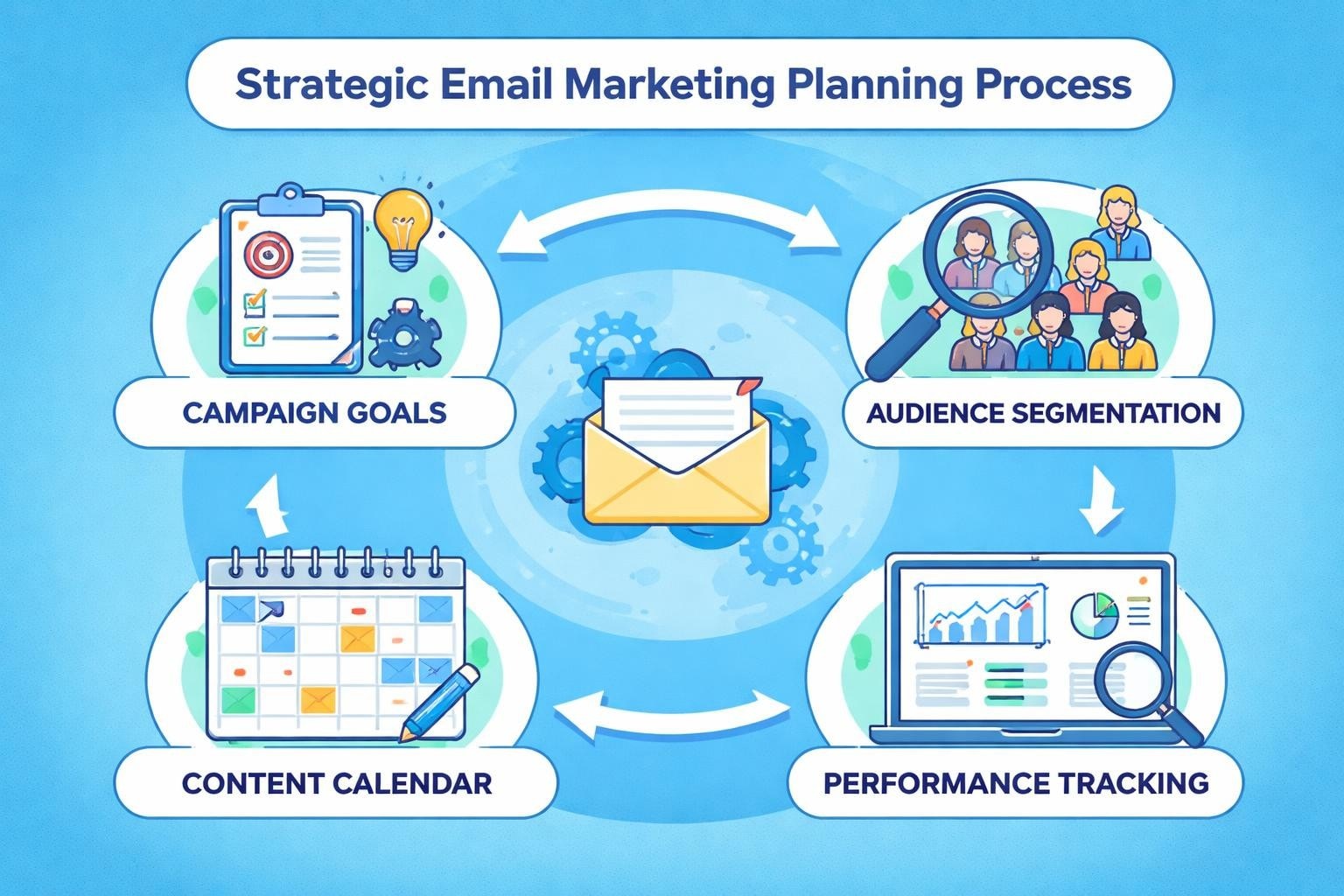
Email marketing remains one of the most cost-effective channels for small businesses to connect with their audiences, but success doesn't happen by accident. The ability to plan email campaigns strategically separates businesses that see consistent results from those struggling with low open rates and minimal engagement. For small business owners navigating the complexities of digital marketing, understanding how to structure your email initiatives properly creates the foundation for sustainable growth and meaningful customer relationships.
Understanding the Fundamentals of Email Campaign Planning
When you plan email campaigns, you're essentially creating a roadmap that guides your messaging, timing, and objectives. This process requires more than simply drafting messages and clicking send. Strategic planning involves understanding your audience, defining clear goals, and establishing metrics that matter to your business outcomes.
The first step is identifying what you want to achieve. Are you nurturing leads, announcing new products, driving traffic to your website, or re-engaging dormant customers? Each objective demands different approaches, content styles, and measurement frameworks. Clear goal-setting transforms vague aspirations into actionable campaigns.
Defining Your Email Marketing Objectives
Your campaign objectives should align directly with broader business goals. If you're launching a seasonal promotion, your emails need to drive immediate conversions. If you're building long-term relationships, educational content and value-driven messaging take priority.
Consider these common email marketing objectives:
- Lead nurturing: Moving prospects through your sales funnel with targeted content
- Customer retention: Keeping existing clients engaged with your brand
- Revenue generation: Driving direct sales through promotional campaigns
- Brand awareness: Establishing thought leadership and maintaining top-of-mind presence
- Event promotion: Encouraging registrations and attendance for webinars or launches
Each objective requires distinct strategies. When you properly plan email sequences around specific goals, you create campaigns that deliver measurable business value rather than generic messages that fail to resonate.
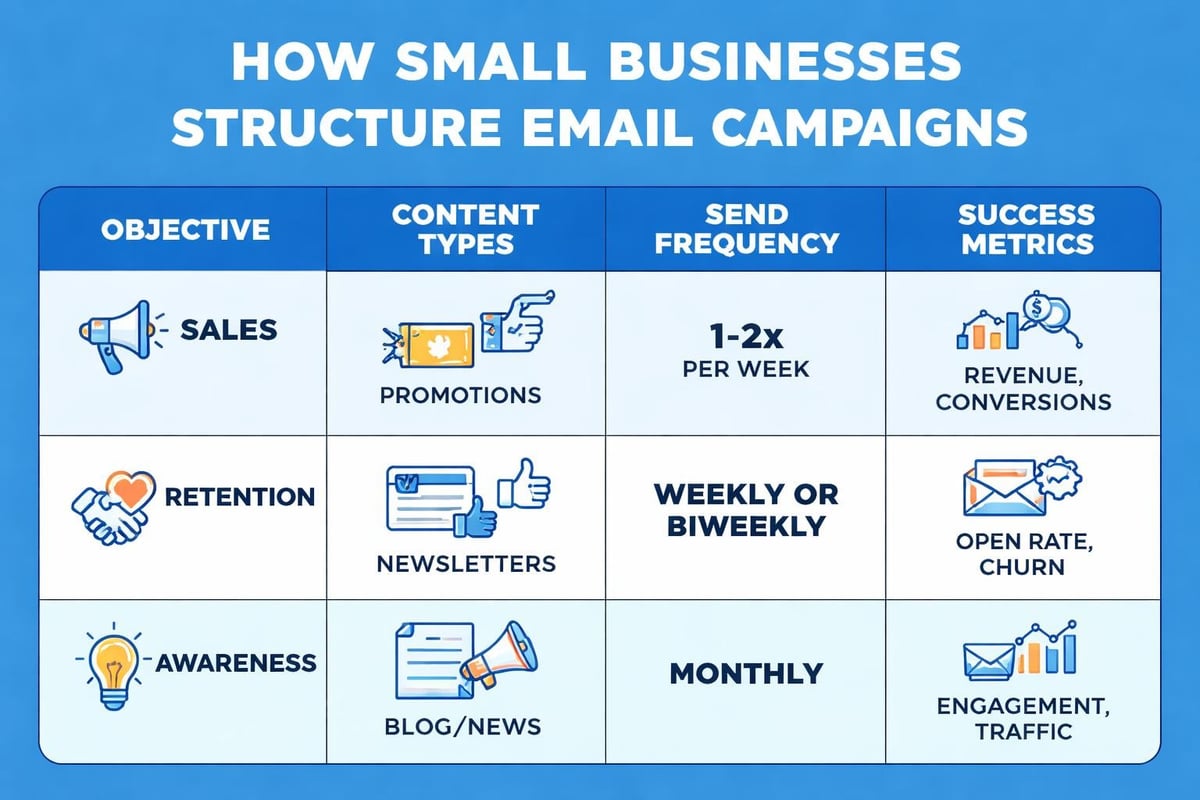
Building Your Email Marketing Calendar
A well-structured calendar is essential when you plan email communications throughout the year. This scheduling framework prevents last-minute scrambles whilst ensuring consistent touchpoints with your audience. Your calendar should balance promotional content with valuable information that serves your subscribers' interests.
Start by mapping out key dates relevant to your business: product launches, seasonal promotions, industry events, and holidays. Then identify opportunities for educational content that positions your brand as a helpful resource. This balance prevents email fatigue whilst maintaining engagement.
Creating a Sustainable Sending Schedule
Determining the right email frequency depends on your audience, industry, and content quality. Some businesses thrive with daily newsletters, whilst others find weekly or monthly cadences more appropriate. The key is consistency and value delivery.
| Sending Frequency | Best For | Considerations |
|---|---|---|
| Daily | News, e-commerce deals, high-engagement audiences | Requires substantial content resources |
| Weekly | Educational content, regular updates | Sustainable for most small businesses |
| Bi-weekly | Mixed promotional and educational content | Good balance of presence and restraint |
| Monthly | In-depth newsletters, B2B companies | Easier to maintain quality but less frequent touchpoints |
Testing different frequencies helps you discover what your specific audience prefers. Monitor unsubscribe rates and engagement metrics as you adjust your schedule. When you follow email marketing best practices, you respect your subscribers' inbox space whilst maintaining valuable connections.
Segmenting Your Audience for Targeted Campaigns
Generic mass emails rarely deliver impressive results. When you plan email campaigns with segmentation in mind, you create personalised experiences that resonate with specific subscriber groups. This targeted approach dramatically improves open rates, click-through rates, and conversions.
Segmentation divides your email list into smaller groups based on shared characteristics. These might include demographics, purchase history, engagement levels, geographic location, or position in the customer journey. Each segment receives content tailored to their specific needs and interests.
Effective Segmentation Strategies
Start with basic segmentation and gradually refine as you gather more data. Even simple divisions create noticeable improvements in campaign performance.
Common segmentation criteria include:
- Behavioural data: Purchase history, website activity, email engagement
- Demographic information: Age, location, job title, company size
- Customer lifecycle stage: New subscribers, active customers, lapsed users
- Engagement level: Highly engaged, moderately active, inactive subscribers
- Preferences: Product interests, content topics, communication frequency
When small businesses build permission-based lists and segment them thoughtfully, they maximise the relevance of every message sent. This strategic approach transforms email from interruption to welcome communication.
Crafting Your Email Content Strategy
Content quality determines whether recipients engage with your emails or send them straight to the bin. When you plan email content strategically, you create messages that inform, entertain, and inspire action. This requires understanding what your audience values and delivering it consistently.
Your content strategy should balance different email types throughout your calendar. Promotional messages drive sales, educational content builds authority, and nurture sequences guide prospects towards purchase decisions. The mix depends on your business model and customer preferences.
Structuring High-Converting Email Messages
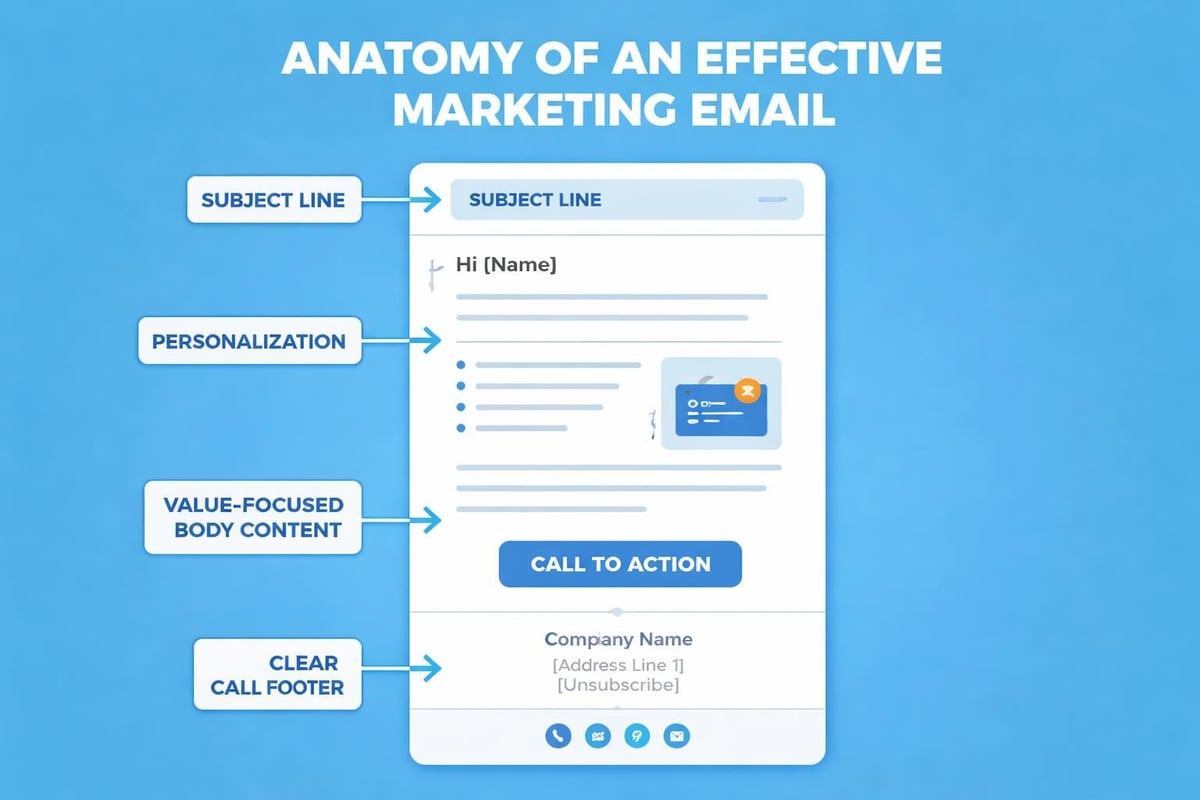
Every email element serves a purpose, from subject lines to call-to-action buttons. When you plan email components deliberately, you create cohesive messages that guide readers towards desired outcomes.
Essential email components:
- Subject line: Captures attention and encourages opens (keep under 50 characters)
- Preview text: Complements the subject line with additional context
- Header: Establishes brand identity and sets expectations
- Body content: Delivers value through clear, scannable information
- Call-to-action: Directs readers towards the next step with specific, compelling language
- Footer: Includes legal requirements, unsubscribe options, and contact information
Common mistakes that email marketers make include neglecting mobile optimisation, using vague subject lines, and overwhelming readers with too many competing calls-to-action. Avoiding these pitfalls requires careful planning and testing.
Implementing Automation and Workflows
Automation transforms how efficiently you can plan email campaigns and execute them at scale. Automated workflows trigger messages based on specific actions or timeframes, delivering timely, relevant content without manual intervention for each send.
Welcome sequences, abandoned cart reminders, post-purchase follow-ups, and re-engagement campaigns all benefit from automation. These workflows nurture relationships whilst you focus on other business priorities. Platforms like Astonish Email make automation accessible even for small businesses without technical expertise.
Building Effective Automated Sequences
Start with foundational workflows that address common customer journey touchpoints. A welcome sequence introduces new subscribers to your brand, sets expectations, and begins the relationship on a positive note.
Key automated workflows for small businesses:
- Welcome series: 3-5 emails introducing your brand, values, and offerings
- Abandoned cart recovery: Reminders for incomplete purchases with incentives
- Post-purchase nurture: Order confirmations, shipping updates, and product tips
- Re-engagement campaigns: Win back inactive subscribers before list cleaning
- Birthday or anniversary emails: Personalised messages with special offers
When you plan email automation thoughtfully, you create systems that work continuously, delivering personalised experiences at scale. This efficiency allows small teams to compete with larger organisations whilst maintaining authentic connections.
Testing and Optimising Your Campaigns
Successful email marketing requires continuous improvement through systematic testing. When you plan email experiments methodically, you gain insights that inform future campaigns and drive incremental performance gains over time.
A/B testing compares two variations of an email element to determine which performs better. You might test subject lines, send times, content layouts, call-to-action wording, or sender names. Each test reveals preferences specific to your audience.
What to Test and How to Measure Success
Focus testing efforts on elements with the greatest potential impact. Subject lines affect open rates, whilst content and calls-to-action influence click-through and conversion rates. Testing one variable at a time provides clear insights.
| Test Element | Primary Metric | Secondary Metrics |
|---|---|---|
| Subject lines | Open rate | Click-through rate, conversions |
| Send times | Open rate | Click-through rate, engagement depth |
| Email layout | Click-through rate | Conversion rate, time spent reading |
| Call-to-action | Click-through rate | Conversion rate, revenue generated |
| Personalisation | Open and click rates | Conversion rate, customer lifetime value |
Establish statistical significance before declaring test winners. Small sample sizes or short testing periods can lead to misleading conclusions. When you craft effective email outreach based on data rather than assumptions, you build campaigns that consistently deliver results.
Ensuring Compliance and Deliverability
Technical considerations significantly impact campaign success when you plan email marketing initiatives. Deliverability determines whether your messages reach inboxes or get filtered into spam folders. Compliance with regulations protects your business and maintains subscriber trust.
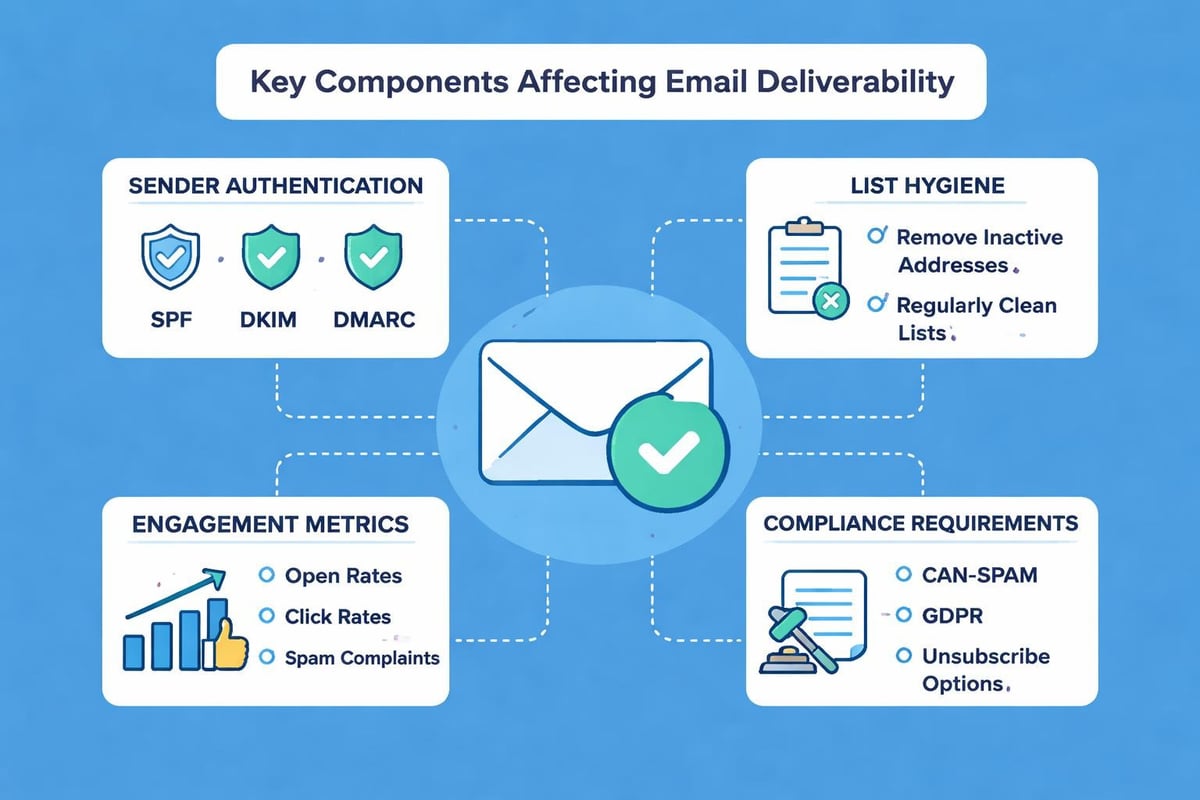
The UK GDPR, CAN-SPAM Act, and other regulations establish requirements for commercial email. These include obtaining proper consent, providing clear unsubscribe mechanisms, and including accurate sender information. Understanding the Astonish Email antispam policy helps you stay compliant whilst maintaining list health.
Maintaining Strong Sender Reputation
Your sender reputation affects deliverability rates. Internet service providers monitor sending patterns, complaint rates, and engagement levels to determine whether your emails deserve inbox placement. Poor reputation leads to blocked or filtered messages.
Best practices for deliverability include:
- Authenticating your domain with SPF, DKIM, and DMARC records
- Maintaining clean lists by removing inactive subscribers regularly
- Monitoring bounce rates and addressing issues promptly
- Avoiding spam trigger words and excessive promotional language
- Providing clear, easy-to-find unsubscribe options
- Sending from consistent, recognisable sender addresses
When small businesses develop effective email marketing strategies, they prioritise deliverability alongside creative content. Technical excellence ensures your carefully planned messages actually reach intended recipients.
Analysing Performance and Gathering Insights
Data analysis transforms email marketing from guesswork into strategic science. When you plan email campaigns with measurement in mind, you establish clear success criteria and track progress towards objectives. This analytical approach identifies what works and what needs adjustment.
Standard metrics include open rates, click-through rates, conversion rates, unsubscribe rates, and revenue generated. However, the most meaningful metrics align with your specific campaign objectives. A nurture sequence might prioritise engagement over immediate conversions, whilst promotional campaigns focus on revenue.
Creating Actionable Reports
Raw numbers mean little without context and interpretation. Effective reporting compares performance against benchmarks, identifies trends, and generates actionable recommendations for future campaigns. When you review metrics regularly, you spot opportunities and address problems before they escalate.
Essential metrics to monitor:
- Open rate: Percentage of recipients who opened your email (subject line effectiveness)
- Click-through rate: Percentage who clicked links (content relevance and appeal)
- Conversion rate: Percentage who completed desired actions (campaign effectiveness)
- Unsubscribe rate: Percentage who opted out (content-audience alignment)
- List growth rate: New subscribers minus unsubscribes and complaints
- Revenue per email: Total revenue divided by emails delivered (ROI measurement)
Comparing performance across segments reveals which audience groups respond best to different messaging approaches. This intelligence informs how you plan email campaigns moving forward, creating an upward spiral of continuous improvement.
Integrating Email with Your Marketing Ecosystem
Email marketing achieves greatest impact when integrated with other channels. When you plan email campaigns as part of a cohesive strategy, you create consistent experiences across customer touchpoints and amplify your messaging through multiple channels.
Social media, content marketing, paid advertising, and email should work together, each reinforcing the others. An Instagram post might drive email signups, whilst email campaigns promote new blog content that generates social shares. This synergy multiplies the effectiveness of individual tactics.
Building Cross-Channel Campaigns
Successful integration requires coordination across platforms and consistent messaging. When customers encounter your brand through multiple channels, recognition and trust build more quickly than single-channel approaches achieve.
Consider how email fits within customer journeys that span multiple touchpoints. A potential customer might discover you through search, visit your website, subscribe via a content offer, receive nurture emails, engage on social media, and eventually make a purchase. Each stage requires appropriate messaging and smooth transitions.
Tools like Astonish Email offer integrations that connect email campaigns with other platforms, streamlining data flow and enabling coordinated multi-channel strategies. When you plan email as part of an integrated approach, you create customer experiences that feel cohesive rather than fragmented.
Scaling Your Email Operations Sustainably
As your business grows, email marketing complexity increases. When you plan email programmes with scalability in mind, you build systems and processes that handle increased volume without sacrificing quality or personal touch.
Automation becomes increasingly important at scale, as do templates, content libraries, and streamlined approval workflows. However, efficiency shouldn't come at the expense of relevance and personalisation. The challenge is maintaining authentic connections whilst reaching larger audiences.
Systems and Processes for Growth
Document your email marketing processes so team members can execute consistently. This includes content creation workflows, approval chains, testing protocols, and post-campaign analysis procedures. Standardisation enables growth without chaos.
- Content creation framework: Templates, brand guidelines, approval processes
- List management protocols: Segmentation rules, cleaning schedules, compliance checks
- Campaign planning calendar: Advance scheduling, coordination with other channels
- Testing methodology: Systematic A/B testing programme with documentation
- Reporting cadence: Regular performance reviews with stakeholder communication
When small businesses build relationships through email marketing, they balance automation efficiency with genuine personalisation. This equilibrium becomes crucial as subscriber counts grow and campaign complexity increases.
Planning email campaigns strategically transforms marketing from reactive messaging into proactive relationship building that drives measurable business results. By establishing clear objectives, understanding your audience, creating valuable content, and continuously optimising based on data, you build email programmes that consistently deliver returns on investment. Whether you're just starting with email marketing or refining existing campaigns, Astonish Email provides the tools and features small businesses need to plan, execute, and analyse professional email campaigns that connect with customers and drive growth.