Email Contacts: Managing Your Marketing Database in 2026
April 11, 2026
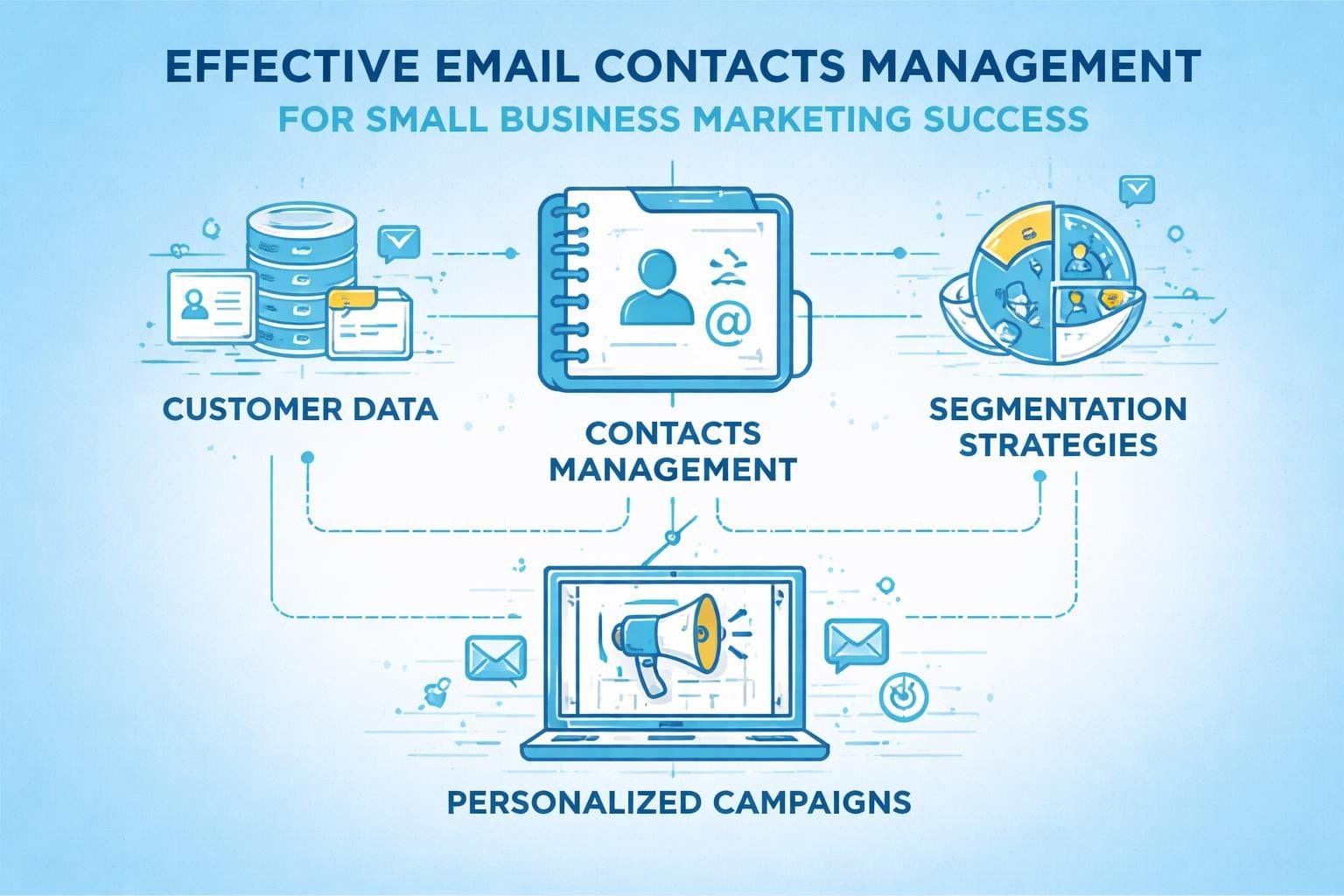
Managing email contacts effectively represents one of the most critical components of successful email marketing campaigns. For small businesses leveraging email marketing platforms, the quality and organization of your contact database directly influences campaign performance, deliverability rates, and overall return on investment. Whether you're just starting to build your list or managing thousands of subscribers, understanding proper contact management practices ensures your marketing efforts reach the right people at the right time whilst maintaining compliance with data protection regulations.
Building Your Email Contacts Database From Scratch
Every successful email marketing strategy begins with acquiring quality email contacts through ethical and compliant methods. Small businesses often make the mistake of purchasing contact lists or adding people without explicit permission, which damages sender reputation and violates privacy regulations.
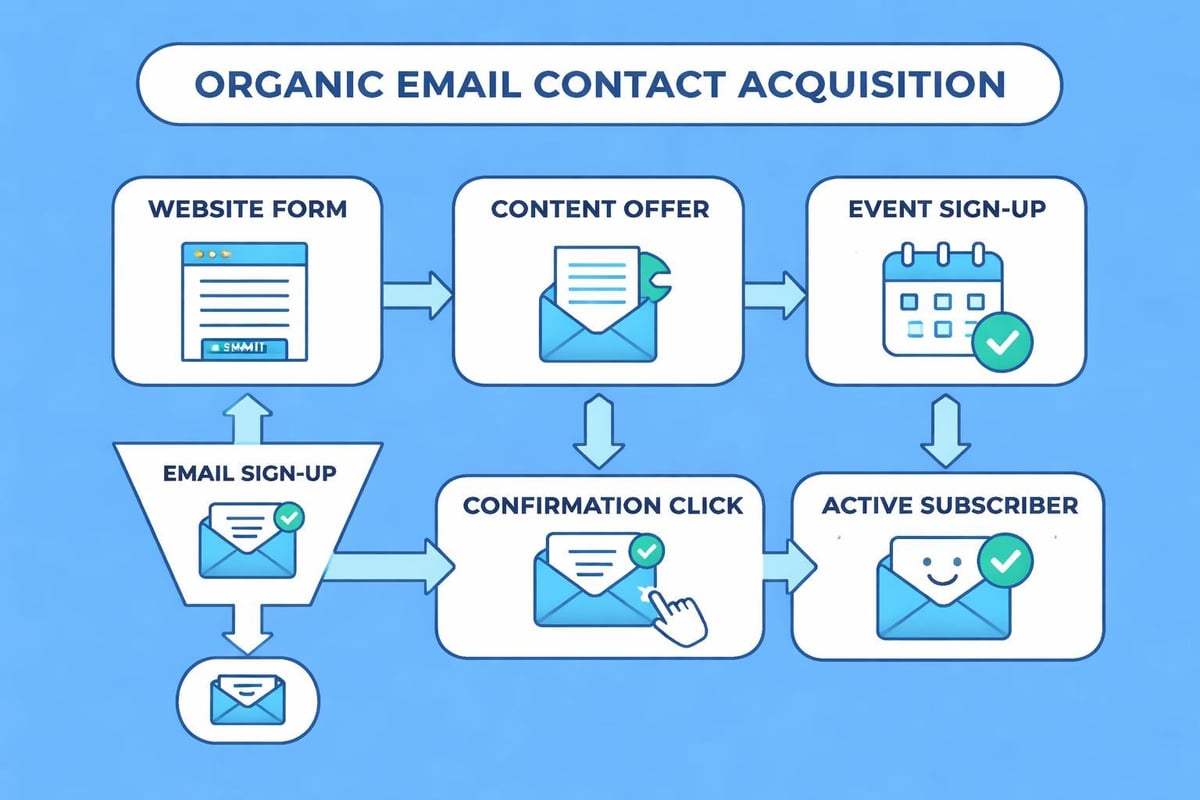
Organic acquisition methods deliver the highest-quality subscribers who genuinely want to hear from your business:
- Website opt-in forms with clear value propositions
- Content upgrades and downloadable resources
- Checkout processes with consent checkboxes
- Social media campaigns with dedicated landing pages
- In-person events with digital sign-up options
- Referral programmes rewarding existing subscribers
The foundation of effective email list management centres on obtaining explicit consent. Double opt-in processes, whilst requiring an extra step, ensure your email contacts actively want to receive communications. This approach significantly improves engagement metrics and reduces spam complaints.
Permission-Based Marketing Standards
Modern email marketing demands strict adherence to permission-based practices. Your email contacts should understand exactly what they're signing up for, how frequently they'll receive messages, and what type of content to expect.
Transparency builds trust and keeps your list healthy. Include specific information during the sign-up process about email frequency, content types, and the ability to unsubscribe at any time. Many email privacy laws require these disclosures, making compliance both a legal necessity and a best practice for maintaining subscriber relationships.
Organising Email Contacts for Maximum Campaign Effectiveness
Once you've built a foundation of quality email contacts, proper organization transforms raw data into actionable marketing intelligence. Small businesses managing email marketing campaigns benefit tremendously from structured contact databases that enable precise targeting.
Segmentation divides your email contacts into meaningful groups based on shared characteristics, behaviours, or preferences. This approach allows you to send relevant messages that resonate with specific audience segments rather than blasting generic content to everyone.
Essential Segmentation Strategies
| Segmentation Type | Data Points Required | Campaign Applications |
|---|---|---|
| Demographic | Age, location, job title | Regional offers, role-specific content |
| Behavioural | Purchase history, email engagement | Product recommendations, re-engagement |
| Lifecycle Stage | New subscriber, active customer, lapsed | Onboarding sequences, retention campaigns |
| Preferences | Content topics, frequency | Personalized newsletters, targeted promotions |
Advanced contact organization also includes custom fields that capture business-specific information. A retail business might track product preferences, whilst a B2B service provider could record company size or industry vertical.
Tag systems provide flexible categorization for your email contacts:
- Interest tags indicating specific topics or product categories
- Engagement tags marking active versus dormant subscribers
- Source tags showing where contacts originated
- Journey tags tracking position in sales funnels
These organizational structures enable sophisticated automation workflows that deliver timely, relevant messages based on subscriber actions and characteristics. When you understand your email contacts at a granular level, every campaign becomes more targeted and effective.
Maintaining Data Quality Across Your Contact Database
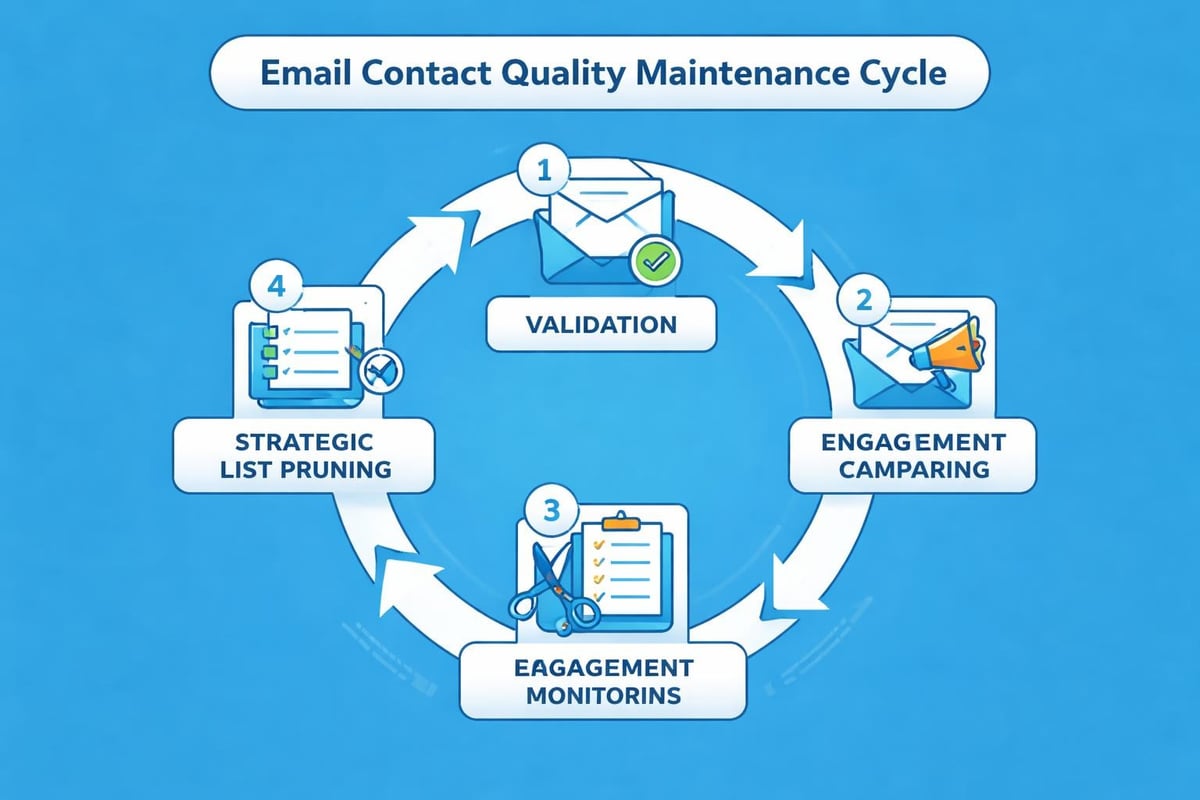
Contact database hygiene directly impacts deliverability rates and campaign performance. As your list grows, email contacts naturally become outdated, inactive, or invalid. Regular maintenance prevents these issues from undermining your marketing effectiveness.
Best practices for contact management emphasize proactive list cleaning over reactive problem-solving. Small businesses should implement systematic processes for identifying and addressing data quality issues before they affect sender reputation.
Regular List Cleaning Protocols
Inactive email contacts who haven't engaged with your campaigns in six to twelve months deserve special attention. Rather than immediately removing them, implement re-engagement campaigns designed to win back interest. Subscribers who don't respond to multiple re-engagement attempts should be removed or suppressed from regular mailings.
Validation processes ensure email contacts remain deliverable:
- Syntax checking to identify malformed addresses
- Domain verification to confirm valid email providers
- Role-based address filtering for addresses like info@ or sales@
- Duplicate detection to merge or remove redundant entries
- Bounce tracking to identify hard versus soft failures
Small businesses using platforms like Astonish Email benefit from built-in validation tools that automate many of these processes. However, understanding the principles helps you make informed decisions about list management strategies.
Compliance and Privacy Considerations
Managing email contacts in 2026 requires strict adherence to data protection regulations spanning multiple jurisdictions. The General Data Protection Regulation (GDPR) in Europe and the California Consumer Privacy Act (CCPA) in the United States establish baseline requirements that affect businesses regardless of size.
Core compliance requirements for email contacts management include:
- Obtaining explicit, informed consent before adding contacts
- Providing clear privacy policies explaining data usage
- Offering easy unsubscribe mechanisms in every email
- Processing data removal requests within required timeframes
- Implementing appropriate security measures to protect contact information
- Maintaining records of consent and communication preferences
Understanding data protection in emails helps small businesses avoid costly violations whilst building customer trust. Your email contacts represent real people who expect their information to be handled responsibly and securely.
Consent Management and Documentation
Proper consent documentation proves critical during audits or complaints. For each entry in your email contacts database, maintain records showing when and how consent was obtained, what the subscriber agreed to receive, and any subsequent preference updates.
Modern email marketing platforms automate much of this documentation, timestamping subscriptions and tracking consent sources. However, businesses bear ultimate responsibility for ensuring their contact acquisition practices align with regulatory requirements.
Growing Your Email Contacts Strategically
Sustainable list growth balances quantity with quality, focusing on acquiring email contacts who align with your ideal customer profile. Small businesses often obsess over list size whilst neglecting engagement metrics that actually drive revenue.
Strategic growth initiatives target specific audience segments through tailored acquisition campaigns. Rather than generic "sign up for our newsletter" calls-to-action, successful businesses offer specific value that appeals to defined customer personas.
High-Converting Lead Magnet Strategies
| Lead Magnet Type | Best For | Expected Conversion Rate |
|---|---|---|
| Industry reports | B2B, professional services | 15-25% |
| Discount codes | E-commerce, retail | 20-35% |
| Educational courses | SaaS, education | 10-20% |
| Templates/tools | Marketing, design | 15-30% |
| Exclusive content | Media, publishing | 8-15% |
Each lead magnet attracts email contacts with specific interests and intent levels. A discount code subscriber might be ready to purchase immediately, whilst a report download indicates earlier-stage research. Understanding these distinctions helps you nurture different contact segments appropriately.
Cross-channel promotion expands your reach beyond existing audiences. Social media followers, blog readers, and podcast listeners represent potential email contacts who already demonstrate interest in your content or offerings.
Leveraging Contact Data for Personalization
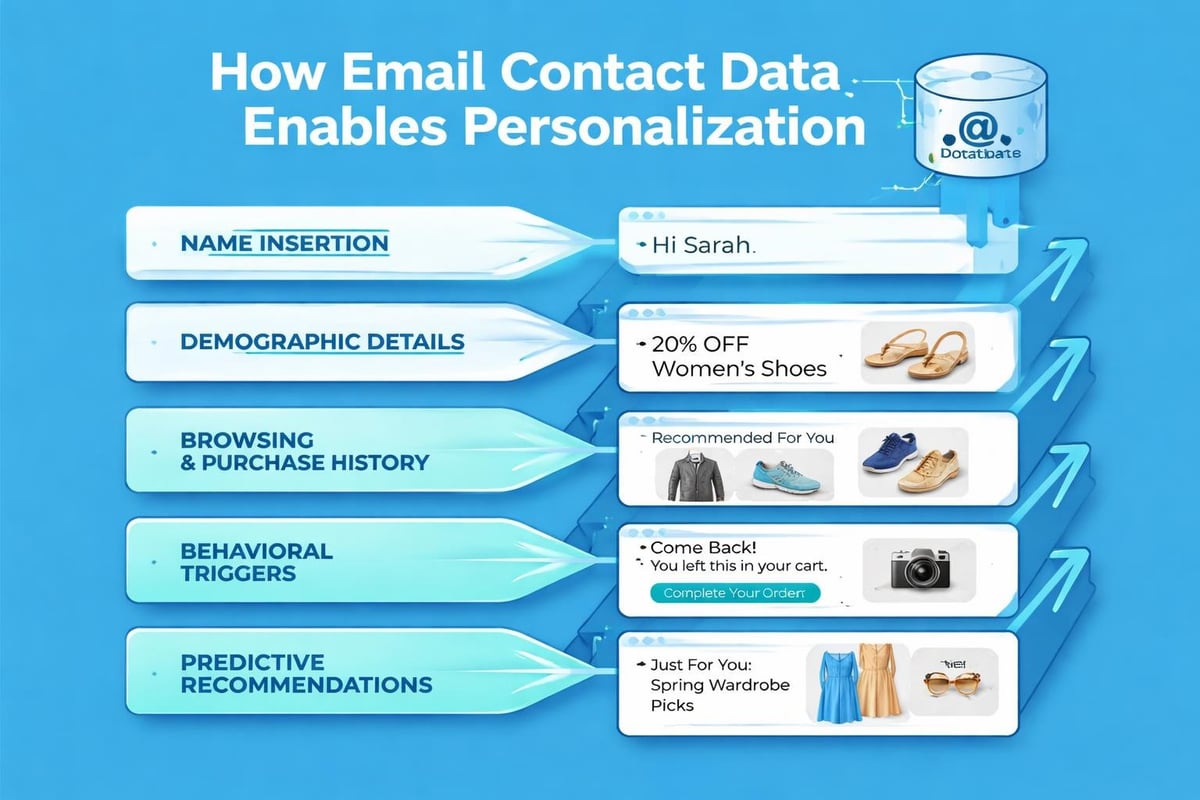
The true value of well-managed email contacts emerges through personalization that treats each subscriber as an individual rather than a database entry. Basic personalization includes using names in subject lines and greetings, but advanced strategies leverage behavioral data and preferences.
Dynamic content blocks change email elements based on subscriber attributes. Product recommendations reflect past purchases, content suggestions align with indicated interests, and promotional offers match demographic characteristics.
Personalization data points transform generic broadcasts into relevant conversations:
- Name and personal details for basic customization
- Location for geography-specific offers and event promotions
- Purchase history for product recommendations and loyalty rewards
- Browsing behavior for abandoned cart recovery and interest-based content
- Email engagement patterns for send-time optimization
Small businesses managing professional email communications can implement sophisticated personalization without enterprise-level resources. Modern platforms make advanced segmentation and dynamic content accessible to businesses of all sizes.
Behavioral Trigger Campaigns
Behavioral triggers automate personalized messages based on specific actions your email contacts take. Welcome sequences greet new subscribers, abandoned cart emails recover potential sales, and re-engagement campaigns target inactive contacts.
These automated workflows deliver relevant messages at optimal moments in the customer journey. A subscriber who downloads a specific resource receives follow-up content on related topics. A customer who purchases one product receives complementary product suggestions.
The key to effective behavioral campaigns lies in mapping customer journeys and identifying meaningful trigger points. Which actions indicate purchase intent? When do customers typically need support or education? What behaviors signal satisfaction or dissatisfaction?
Integration With Customer Relationship Management
Sophisticated email contacts management extends beyond standalone marketing platforms to integrate with broader customer relationship management (CRM) systems. This integration creates a unified view of each contact, combining marketing engagement with sales interactions and customer support history.
For small businesses, choosing contact management software that integrates seamlessly with email marketing tools eliminates data silos and enables coordinated customer experiences. Sales teams access email engagement data when prioritizing leads, whilst marketing teams leverage purchase history for campaign targeting.
Integration benefits include:
- Synchronized contact information across all systems
- Marketing attribution connecting campaigns to revenue
- Lead scoring combining email engagement with sales qualification
- Customer lifecycle visibility from prospect to advocate
- Coordinated communication preventing message conflicts
Two-way synchronization ensures updates in either system reflect across both. A contact who unsubscribes from marketing emails gets flagged in the CRM, whilst a closed sale in the CRM triggers appropriate email automation sequences.
Metrics and Analytics for Contact Management
Measuring the health and effectiveness of your email contacts database requires tracking specific metrics beyond standard campaign analytics. List growth rate, churn rate, and engagement trends reveal whether your contact management practices support long-term marketing success.
Key Contact Database Metrics
List growth rate measures net subscriber additions as a percentage of total list size. Healthy growth rates vary by industry but typically range from 2-5% monthly for established businesses. Declining growth rates signal issues with acquisition strategies or value proposition.
Churn rate tracks unsubscribes and removals as a percentage of total email contacts. Annual churn rates below 25% indicate healthy list engagement, whilst higher rates suggest content relevance or frequency problems.
Engagement rate trends show whether your active subscriber percentage is rising or falling over time. Improving engagement suggests better targeting and content, whilst declining engagement indicates list quality issues.
| Metric | Calculation | Healthy Benchmark |
|---|---|---|
| Monthly Growth Rate | (New Contacts - Lost Contacts) / Total Contacts | 2-5% |
| Annual Churn Rate | Annual Unsubscribes / Average List Size | <25% |
| Active Subscriber % | Engaged Last 90 Days / Total Contacts | >40% |
| Email Acquisition Cost | Marketing Spend / New Subscribers | £1-5 |
These metrics guide strategic decisions about acquisition channels, content strategies, and list management practices. Understanding which sources deliver the highest-quality email contacts helps optimize marketing investments.
Advanced Strategies for Small Business Email Marketers
Small businesses competing with larger organizations benefit from sophisticated contact management strategies that maximize the value of smaller lists. Quality trumps quantity when every email contact receives appropriately targeted, genuinely valuable communications.
Micro-segmentation divides your database into highly specific groups enabling hyper-relevant messaging. Rather than broad segments like "customers" or "prospects," micro-segments might include "customers who purchased product X in the last 30 days and opened our recent feature announcement email."
Predictive analytics identify patterns in your email contacts data that forecast future behaviors. Which attributes correlate with high lifetime value? What engagement patterns precede purchases? Which contacts are most likely to churn?
Progressive profiling gradually builds detailed contact records without overwhelming subscribers with lengthy forms. Initial sign-up requests minimal information, whilst subsequent interactions gather additional data points through preference centers, surveys, and tracked behaviors.
Preference centers empower email contacts to customize their experience, selecting content topics, email frequency, and communication channels. This self-service approach improves satisfaction whilst providing valuable preference data for segmentation.
Managing your email marketing database effectively requires balancing growth ambitions with quality standards, personalization with privacy, and automation with authenticity. Small businesses that invest in proper contact management infrastructure position themselves for sustainable marketing success as their audience grows.
Building and maintaining a quality email contacts database forms the foundation of effective small business marketing in 2026. By implementing proper acquisition strategies, maintaining data quality, ensuring compliance, and leveraging contact information for personalization, you create marketing campaigns that genuinely resonate with your audience. Astonish Email provides small businesses with the tools and infrastructure needed to manage growing contact databases whilst delivering personalized campaigns that drive results. Start building your email marketing success today with a platform designed specifically for small business needs.