Email Business: Complete Guide for Small Business Success
March 19, 2026
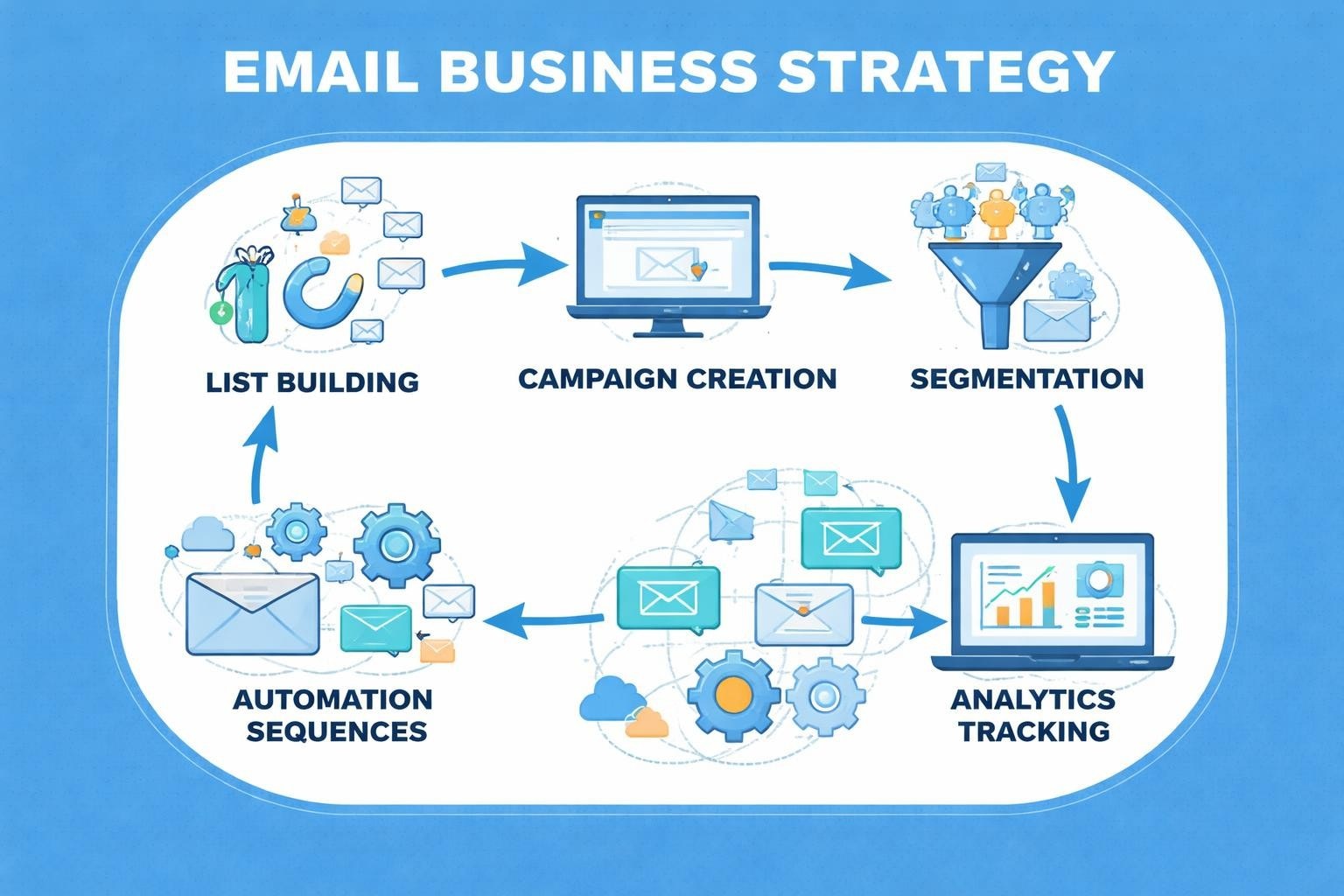
Running an email business in 2026 requires more than simply sending messages to a list of contacts. Small businesses face increasing competition for inbox attention whilst navigating evolving regulations, accessibility requirements, and changing consumer expectations. The email business landscape has transformed dramatically, with automation, personalisation, and data-driven strategies becoming essential rather than optional. Success depends on understanding both the technical foundations and strategic approaches that drive engagement, conversions, and long-term customer relationships.
Understanding the Modern Email Business Landscape
The email business ecosystem has evolved significantly over recent years. According to recent industry data, email marketing statistics reveal impressive engagement rates that continue to outperform many newer digital channels. Despite predictions of email's decline, it remains one of the most cost-effective marketing channels available to small businesses.
Key Market Dynamics in 2026
Several forces shape today's email business environment:
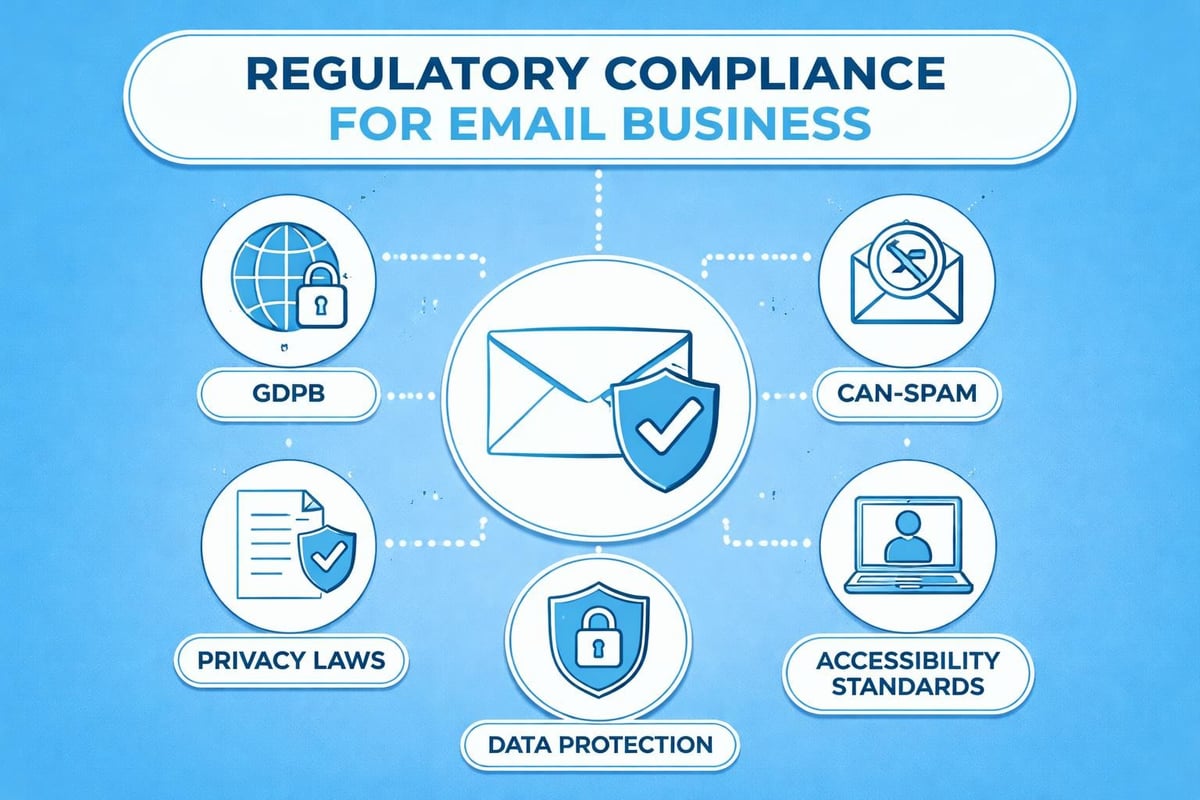
- Regulatory compliance requirements including GDPR, the CAN-SPAM Act, and emerging privacy legislation
- Accessibility standards driven by regulations like the European Accessibility Act affecting email design
- Mobile-first consumption with over 60% of emails opened on mobile devices
- AI integration transforming content creation and personalisation capabilities
- Inbox filtering algorithms becoming increasingly sophisticated at identifying spam
The competitive landscape demands more than basic email campaigns. Small businesses must develop comprehensive strategies that address deliverability, engagement, and conversion simultaneously.
Building Your Email Business Foundation
Establishing a successful email business starts with solid infrastructure and clear strategic direction. This foundation supports all subsequent marketing efforts and determines long-term sustainability.
Essential Infrastructure Components
| Component | Purpose | Implementation Priority |
|---|---|---|
| Email Service Provider | Campaign delivery and management | Critical - Week 1 |
| List Management System | Subscriber organization and segmentation | Critical - Week 1 |
| Compliance Framework | Legal requirements and consent tracking | Critical - Week 1 |
| Analytics Platform | Performance measurement and optimization | High - Week 2 |
| Template Library | Consistent branding and efficient creation | Medium - Month 1 |
| Automation Workflows | Scalable communication sequences | Medium - Month 2 |
When selecting your email marketing infrastructure, consider platforms specifically designed for small business needs. Astonish Email provides purpose-built solutions that address the unique challenges faced by growing companies without enterprise-level complexity.
List building represents the cornerstone of any email business strategy. Quality trumps quantity in every scenario. A list of 500 engaged subscribers delivers better results than 5,000 uninterested contacts.
Strategic Planning Essentials
Before sending your first campaign, establish clear objectives:
- Define your target audience segments based on demographics, behaviour, and preferences
- Establish measurable key performance indicators including open rates, click-through rates, and conversion metrics
- Create a content calendar that balances promotional and value-driven communications
- Develop brand voice guidelines ensuring consistency across all email touchpoints
- Map customer journeys identifying key touchpoints where email adds value
Small businesses often underestimate the importance of proper email address management for marketing purposes. Using a professional, recognisable sender address builds trust and improves deliverability compared to generic or personal email addresses.
Crafting Effective Email Business Campaigns
Campaign effectiveness determines email business success more than any other factor. Even the largest, most engaged list produces poor results without compelling content and strategic execution.
Content Development Best Practices
Strong email campaigns balance multiple elements simultaneously. Subject lines must capture attention whilst accurately representing content. Misleading headlines may boost initial open rates but damage long-term trust and engagement.
Body content should deliver immediate value. Recipients decide within seconds whether to engage or delete. Front-load important information, use scannable formatting with subheadings and bullet points, and include clear calls to action.
Consider these proven content approaches:
- Educational content that solves specific problems your audience faces
- Exclusive offers available only to email subscribers
- Behind-the-scenes insights that build personal connections
- User-generated content showcasing customer success stories
- Timely updates about products, services, or industry developments
Salesforce outlines essential email marketing best practices that emphasise the importance of segmentation and personalisation. These strategies transform generic broadcasts into targeted communications that resonate with specific audience segments.
Optimisation and Testing Strategies
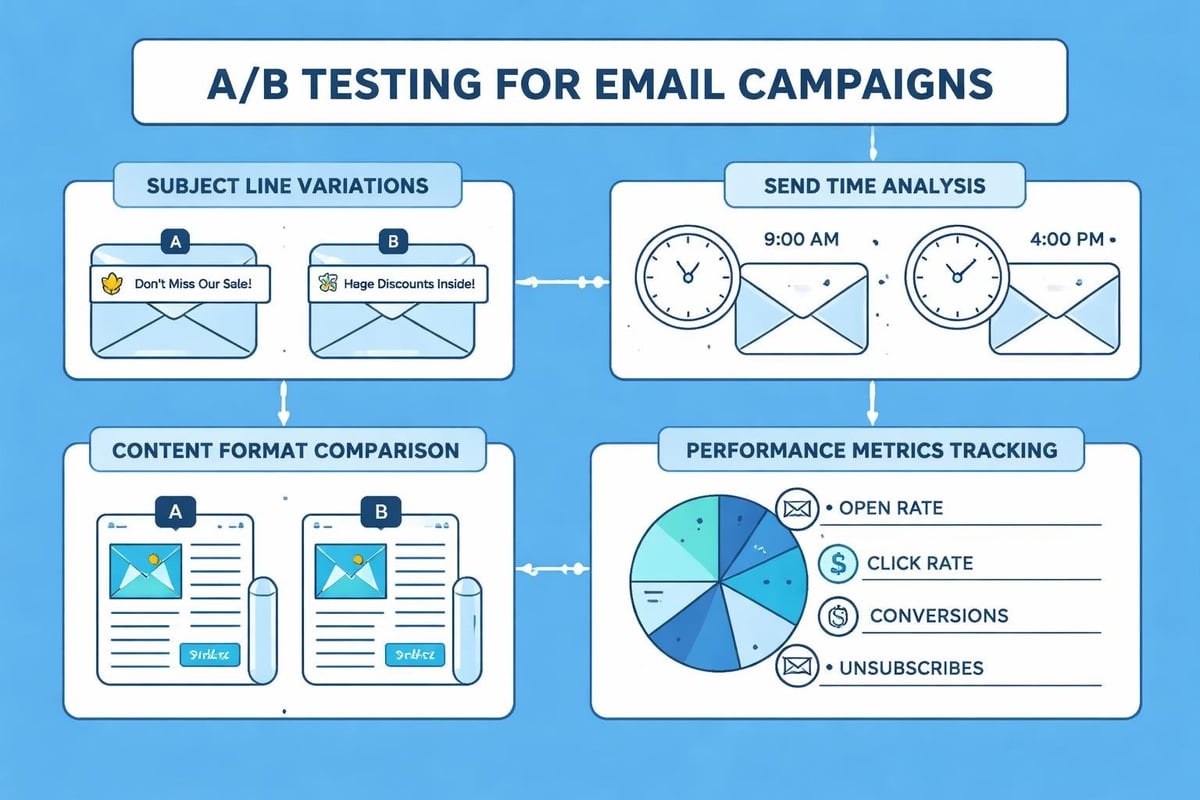
Continuous improvement separates successful email businesses from struggling competitors. A/B testing provides data-driven insights that eliminate guesswork.
Test these critical elements systematically:
- Subject lines and preview text variations
- Send times and day-of-week performance
- Content length and format preferences
- Call-to-action button placement and wording
- Visual design elements and image usage
- Personalisation token effectiveness
Document every test result to build institutional knowledge. What works for one audience segment may fail with another, requiring customised approaches across different subscriber groups.
Automation and Workflow Development
Automation transforms an email business from labour-intensive to scalable. Well-designed workflows nurture relationships, drive conversions, and maintain engagement without constant manual intervention.
High-Impact Automation Sequences
| Workflow Type | Trigger | Typical Length | Primary Goal |
|---|---|---|---|
| Welcome Series | New subscription | 3-5 emails | Onboarding and engagement |
| Abandoned Cart | Incomplete purchase | 2-3 emails | Conversion recovery |
| Re-engagement | Inactivity period | 2-4 emails | List hygiene and reactivation |
| Post-Purchase | Completed transaction | 3-6 emails | Satisfaction and retention |
| Educational Drip | Topic interest | 5-10 emails | Authority building |
Welcome sequences deserve particular attention. First impressions shape ongoing engagement patterns. New subscribers are most receptive immediately after joining your list. Deliver exceptional value quickly, set clear expectations about email frequency, and establish your brand voice from the first message.
Understanding how different email clients display your messages ensures consistent experiences across devices and platforms. Testing across multiple email clients prevents formatting disasters that undermine professional credibility.
Personalisation Beyond First Names
Modern email business practices demand sophisticated personalisation. Simple first-name insertion no longer differentiates your communications. Advanced strategies include:
- Behavioural triggers based on website browsing, purchase history, or content consumption
- Dynamic content blocks that change based on subscriber attributes
- Predictive recommendations using AI to suggest relevant products or content
- Lifecycle stage messaging tailored to where customers are in their journey
- Geographic customisation reflecting local events, weather, or cultural considerations
Research shows that personalised subject lines significantly improve engagement rates, but personalisation throughout the entire message amplifies results even further.
Deliverability and Technical Excellence
The best campaign fails if it never reaches the inbox. Email deliverability combines technical configuration, sender reputation, and content quality.
Technical Foundation Requirements
Proper authentication protocols form the bedrock of deliverability. Implement these essential configurations:
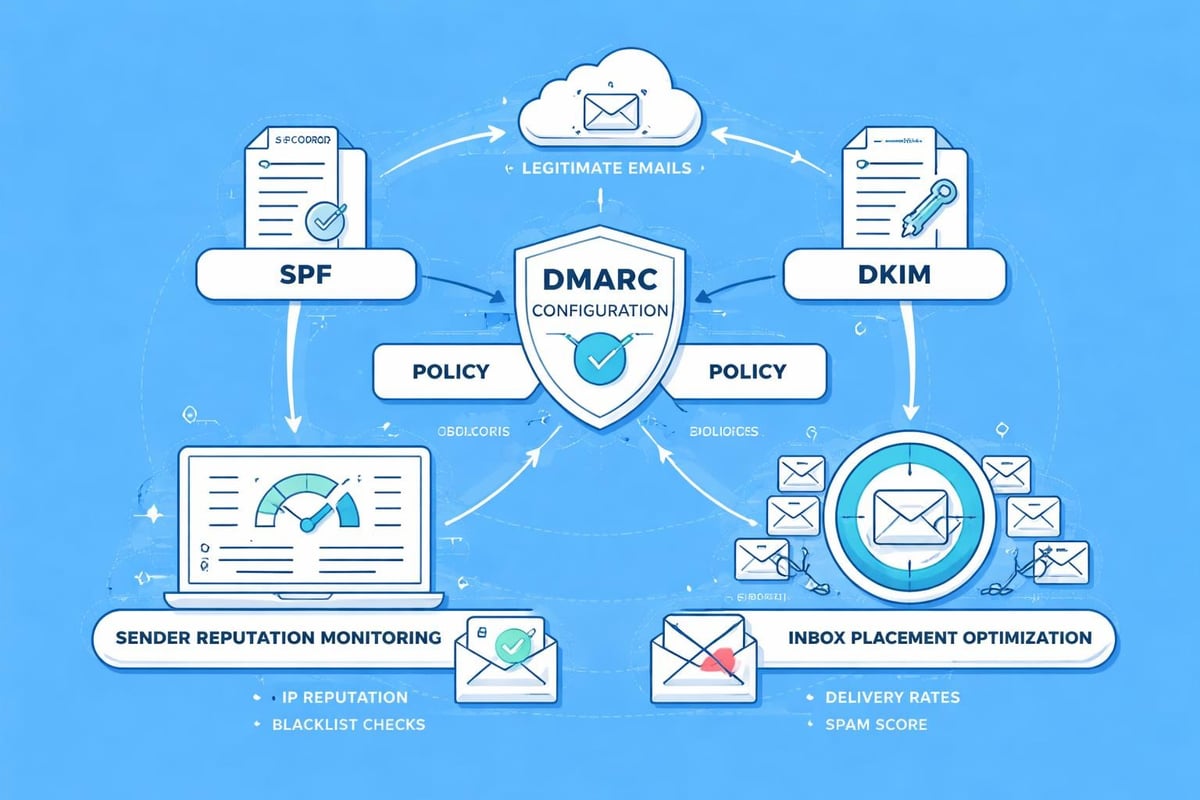
- SPF (Sender Policy Framework) records authorising sending servers
- DKIM (DomainKeys Identified Mail) signatures verifying message authenticity
- DMARC (Domain-based Message Authentication) policies instructing receivers how to handle unauthenticated mail
- Dedicated IP addresses for high-volume senders (typically 100,000+ monthly emails)
- Reverse DNS records matching your sending domain
Maintaining a clean list directly impacts deliverability. Remove hard bounces immediately, monitor soft bounce patterns for recurring issues, and regularly purge inactive subscribers who haven't engaged in 6-12 months.
Pipedrive discusses strategies to avoid abuse reports, emphasising the importance of permission-based marketing and clear unsubscribe mechanisms. Every abuse complaint damages sender reputation, potentially affecting inbox placement for all future campaigns.
Monitoring and Maintaining Sender Reputation
Your sender reputation functions like a credit score for email. Internet service providers track numerous signals:
- Complaint rates (aim for under 0.1%)
- Bounce rates (keep total bounces below 5%)
- Spam trap hits (indicating poor list hygiene)
- Engagement metrics (opens, clicks, replies)
- Sending volume patterns (sudden spikes raise red flags)
Monitor your reputation proactively using tools like Google Postmaster, Microsoft SNDS, and dedicated deliverability platforms. Address issues immediately before they cascade into broader problems affecting campaign performance.
Compliance and Legal Considerations
Operating an email business requires strict adherence to multiple regulatory frameworks. Non-compliance risks significant financial penalties and reputational damage.
Core Compliance Requirements
Different jurisdictions impose varying requirements, but certain principles apply universally:
- Explicit consent before adding contacts to marketing lists
- Clear identification of the sender in every message
- Functioning unsubscribe mechanisms that process requests within required timeframes
- Accurate subject lines that reflect message content
- Physical address inclusion in email footers
- Prompt opt-out processing typically within 10 business days
The antispam policy framework at Astonish Email demonstrates commitment to responsible email practices. Following established guidelines protects both your business and your subscribers.
Documentation proves compliance during audits or disputes. Maintain records of:
- Consent timestamps and methods (web form, in-person, phone)
- Unsubscribe requests and processing dates
- List source information for purchased or rented lists
- Suppression list updates and maintenance
Small businesses sometimes assume regulations only affect large enterprises. This misconception creates liability. Penalties often scale based on violation count rather than company size, making compliance essential regardless of email volume.
Analytics and Performance Measurement
Data-driven decision-making separates thriving email businesses from those that plateau. Comprehensive analytics reveal what works, what doesn't, and where opportunities exist.
Essential Metrics to Track
| Metric Category | Key Indicators | Target Benchmarks |
|---|---|---|
| Delivery | Delivery rate, bounce rate | >95% delivery, <5% bounces |
| Engagement | Open rate, click-through rate | 20-30% opens, 2-5% clicks |
| Conversion | Conversion rate, revenue per email | Varies by industry |
| List Health | Growth rate, churn rate | Positive net growth |
| Technical | Load time, rendering issues | <3 seconds, <5% errors |
Context matters more than absolute numbers. A 15% open rate might indicate problems for a highly engaged B2C list but represent success for a B2B publication. Compare performance against your historical baselines and industry-specific benchmarks.
Beyond standard metrics, examine deeper indicators:
- Click-to-open rate (engagement quality among those who opened)
- List growth trends over time
- Revenue attribution across different campaign types
- Engagement patterns by subscriber segment
- Device and client usage statistics
Understanding detailed email analytics helps identify specific areas for improvement rather than making broad, unfocused changes.
Advanced Strategies for Email Business Growth
Mature email businesses implement sophisticated strategies that maximise customer lifetime value and competitive advantage.
Segmentation and Targeting Mastery
Move beyond basic demographic segmentation to behavioural and predictive approaches. Create segments based on:
- Purchase behaviour patterns including frequency, recency, and monetary value
- Content engagement preferences showing topic and format interests
- Lifecycle stage progression from prospect through customer to advocate
- Predicted churn risk using historical data patterns
- Cross-sell and upsell potential based on purchase history
Micro-segmentation enables highly relevant messaging. Rather than creating one "customers" segment, develop distinct groups like "recent first-time buyers," "loyal repeat customers," and "at-risk high-value accounts." Each requires different messaging strategies.
Integration and Ecosystem Development
Your email business doesn't exist in isolation. Integrate with other marketing channels and business systems:
- CRM synchronisation ensuring sales and marketing alignment
- E-commerce platform connections for real-time inventory and purchase data
- Website behaviour tracking to understand cross-channel journeys
- Social media coordination maintaining consistent messaging
- Customer service integration using support interactions to inform email strategy
Common rookie mistakes in email marketing often stem from treating email as a standalone channel rather than part of an integrated customer experience.
The rise of AI in email has been dramatic, with studies showing only 13% of emails globally are human-written. This trend creates both opportunities and challenges. AI tools can enhance efficiency whilst raising questions about authenticity and personalisation balance.
Scaling Your Email Business Operations
Growth brings new challenges. Strategies that worked with 1,000 subscribers often fail at 100,000. Plan for scalability from the beginning.
Infrastructure Scaling Considerations
As volume increases, evaluate:
- Platform capabilities and pricing tiers that align with growth projections
- Team structure determining when to hire specialists versus generalists
- Process documentation enabling consistent execution across team members
- Technology stack ensuring tools integrate smoothly as complexity increases
- Budget allocation balancing investment in tools, talent, and testing
Many small businesses find that flexible pricing plans accommodate growth without forcing premature upgrades or limiting experimentation during early stages.
Maintain quality whilst scaling. Rapid list growth tempts businesses to sacrifice segmentation, personalisation, or testing. These shortcuts ultimately undermine long-term success. Build systems that scale without compromising the fundamentals that drive results.
Building a successful email business in 2026 requires balancing strategic vision with tactical execution, combining technical expertise with creative content development, and maintaining compliance whilst pursuing growth. The email channel continues delivering exceptional returns for small businesses that approach it systematically and professionally. Whether you're starting fresh or optimising existing efforts, Astonish Email provides the tools and support small businesses need to execute sophisticated email marketing strategies without enterprise complexity or costs.